
Honda vehicles have earned a strong reputation for reliability, fuel efficiency, and long-term durability. Still, even well-engineered cars rely on complex systems that must work together perfectly.
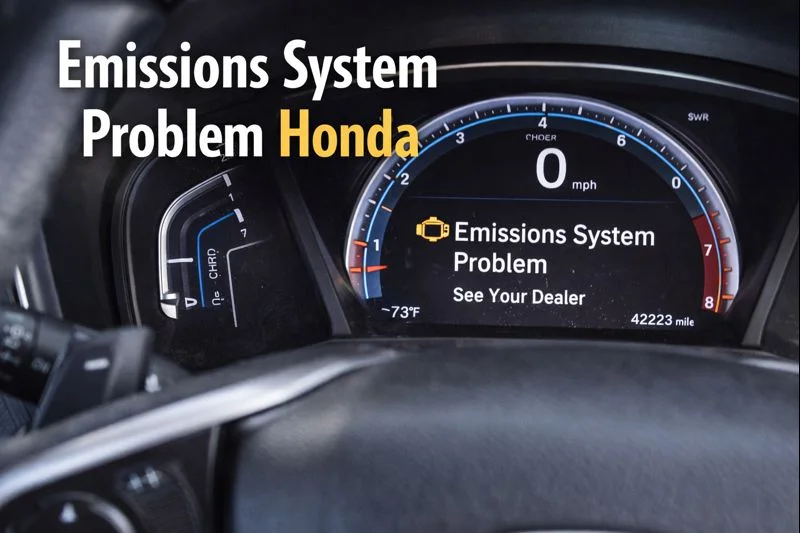
One of the most misunderstood alerts Honda owners encounter is the “Emissions System Problem” message. When this warning appears, it often causes confusion because the car may still drive normally, with no obvious change in performance.
Unlike older vehicles that relied on simple exhaust setups, modern Hondas use advanced emissions systems designed to reduce harmful gases and meet strict environmental standards.
These systems involve sensors, valves, computers, and exhaust components working continuously in the background. When something falls outside expected limits, the vehicle alerts the driver.
This article explains emissions system problems in Honda vehicles in clear, everyday language. It breaks down what the message means, why it appears, what parts are usually involved, how serious it is, and what steps make sense next. The goal is understanding, not alarm, so you can respond confidently and correctly.
Table of Contents
What An Emissions System Problem Really Means
An emissions system problem message indicates that the vehicle has detected an issue related to exhaust gases, fuel vapor control, or air-fuel balance. It does not automatically mean the car is unsafe or about to break down.
The emissions system exists to limit pollutants released into the air. To do this, the vehicle constantly monitors exhaust output and fuel usage. When sensor readings fall outside normal ranges, the system flags a problem.
This warning is broader than a simple check engine light code. It acts as a general alert that one or more emissions-related components need attention.
Why Honda Uses A Dedicated Emissions Warning
Honda vehicles are designed with dedicated alerts to help drivers identify problems early. The emissions system problem message is meant to provide clarity rather than vague warnings.
Instead of leaving drivers guessing, Honda highlights issues related specifically to emissions performance. This helps technicians narrow down diagnostics more efficiently.
The message is also tied to environmental compliance. Addressing emissions issues promptly helps ensure the vehicle continues to meet legal standards.
Core Components In Honda Emissions Systems
Several parts work together to control emissions. One major component is the oxygen sensor, which measures how much oxygen is present in exhaust gases. This information helps the engine adjust fuel delivery.
Another key part is the catalytic converter. It reduces harmful gases by converting them into less harmful substances before they exit the exhaust.
The evaporative emissions system also plays an important role. It captures fuel vapors from the gas tank and routes them back into the engine to be burned instead of released into the air.
How Sensors Trigger The Warning Message
Honda emissions systems rely heavily on sensors. These sensors send continuous data to the engine control unit. If readings are inconsistent, slow to respond, or out of range, the system flags a problem.
Sometimes the issue is not a failed component but a signal that does not match expected behavior. For example, a sensor may still work but respond too slowly.
Because the system is sensitive, even small irregularities can trigger the warning message.
Common Reasons The Message Appears
One frequent cause is a loose or faulty fuel cap. If the cap does not seal properly, fuel vapors escape, and the system detects a leak.
Sensor degradation is another common factor. Over time, oxygen sensors and other monitoring devices wear out and lose accuracy.
Software updates, battery voltage drops, or temporary system glitches can also trigger the message, even when no physical damage exists.
Fuel System Issues And Emissions Alerts
Fuel delivery plays a major role in emissions control. If fuel injectors do not spray correctly, combustion becomes inefficient, leading to higher emissions.
Low-quality fuel or contamination can also affect emissions performance. The engine may struggle to maintain the correct air-fuel mixture.
In these cases, the emissions system message is a sign that combustion efficiency has dropped below acceptable levels.
Exhaust System Problems That Cause Warnings
Exhaust leaks before the catalytic converter can introduce extra oxygen into the system. This confuses sensors and triggers alerts.
Damage to exhaust components from road debris or corrosion can also disrupt emissions control.
While exhaust problems may not always affect how the car feels to drive, they have a direct impact on emissions readings.
Impact Of Driving Conditions On Emissions Systems
Short trips can contribute to emissions warnings. When the engine does not fully warm up, sensors and catalytic converters may not reach optimal operating temperature.
Frequent stop-and-go driving can also strain the system, especially in colder climates.
Over time, these conditions can lead to buildup or sensor inefficiencies that trigger alerts.
Is It Safe To Drive With The Message On
In many cases, the car can still be driven when the emissions system problem message appears. If there are no changes in performance, unusual noises, or warning lights flashing, immediate danger is unlikely.
However, ignoring the message for extended periods is not recommended. Continued driving with unresolved emissions issues can cause additional components to wear prematurely.
If the car enters reduced power mode or displays additional warnings, driving should be limited until inspected.
Why Performance Often Feels Normal
Emissions issues often affect efficiency rather than drivability. The engine may still run smoothly while producing slightly higher emissions.
Honda systems are designed to protect drivability whenever possible. This means the car may feel normal even while a fault is present.
The absence of symptoms does not mean the issue should be ignored.
Diagnostic Process Used By Technicians
When diagnosing an emissions system problem, technicians begin by scanning the vehicle for stored fault codes. These codes provide clues about which system detected an issue.
Visual inspections follow, focusing on hoses, wiring, sensors, and exhaust components.
Further testing may include smoke tests for leaks, sensor response analysis, or software checks.
Typical Repair Scenarios And Their Complexity
Some repairs are simple, such as tightening or replacing a fuel cap. Others involve replacing sensors or valves.
More complex repairs may include catalytic converter replacement or repairing fuel vapor lines.
The complexity depends on the root cause, not the warning message itself.
Cost Range And What Influences It
Repair costs vary widely. Minor fixes may cost very little, while major component replacements can be expensive.
Labor time, part availability, and vehicle age all influence total cost.
Early diagnosis often reduces expense by preventing damage from spreading.
Warranty Coverage And Emissions Components
Many emissions components are covered under extended emissions warranties, depending on region and vehicle age.
Catalytic converters and certain sensors may qualify for longer coverage than standard parts.
Checking warranty status before authorizing repairs can save significant money.
Preventive Steps Owners Can Take
Ensuring the fuel cap is properly tightened after refueling prevents common vapor leak issues.
Using quality fuel and keeping up with regular maintenance supports efficient combustion.
Addressing minor warning messages promptly prevents escalation.
Misconceptions About Emissions Warnings
A common misunderstanding is that emissions problems always mean failed inspections. Many issues can be resolved before inspection time.
Another misconception is that clearing the message fixes the problem. Clearing codes without repair often leads to the message returning.
Understanding these points helps avoid frustration.
Long-Term Effects Of Ignoring The Problem
Ignoring emissions system problems can lead to reduced fuel efficiency, increased repair costs, and potential inspection failures.
Over time, unresolved issues may damage expensive components.
Addressing problems early preserves vehicle value and reliability.
Environmental Responsibility And Emissions Control
Emissions systems exist not just for regulations but for environmental health. Proper operation reduces harmful pollutants.
Maintaining these systems supports cleaner air and responsible vehicle ownership.
Small repairs contribute to a larger positive impact.
How Honda Designs Emissions Systems For Longevity
Honda designs emissions systems with durability in mind. Components are tested for long-term performance under various conditions.
Despite this, wear and environmental factors eventually take their toll.
The warning message is part of Honda’s approach to proactive maintenance rather than reactive breakdowns.
Building Confidence As A Honda Owner
Understanding emissions system messages removes fear and uncertainty. Knowledge allows owners to respond logically instead of assuming the worst.
With clear information and proper diagnosis, most emissions issues are manageable.
Confidence comes from knowing what the car is communicating and why.
Final Thoughts
An emissions system problem in a Honda vehicle is not a reason for panic, but it is a signal that deserves attention. The message reflects the vehicle’s effort to maintain efficiency, compliance, and long-term reliability.
By understanding how the system works, recognizing common causes, and responding in a timely way, owners can resolve issues without unnecessary stress or expense. Addressing emissions concerns early keeps the vehicle running cleanly, efficiently, and as intended for years to come.

- Broken Belt In Tire Symptoms Causes And Safe Fix - May 4, 2026
- Car Starts Sometimes And Sometimes It Doesn’t Causes And Fix - May 4, 2026
- Synthetic Oil Change Cost At Jiffy Lube In 2026 - May 4, 2026