
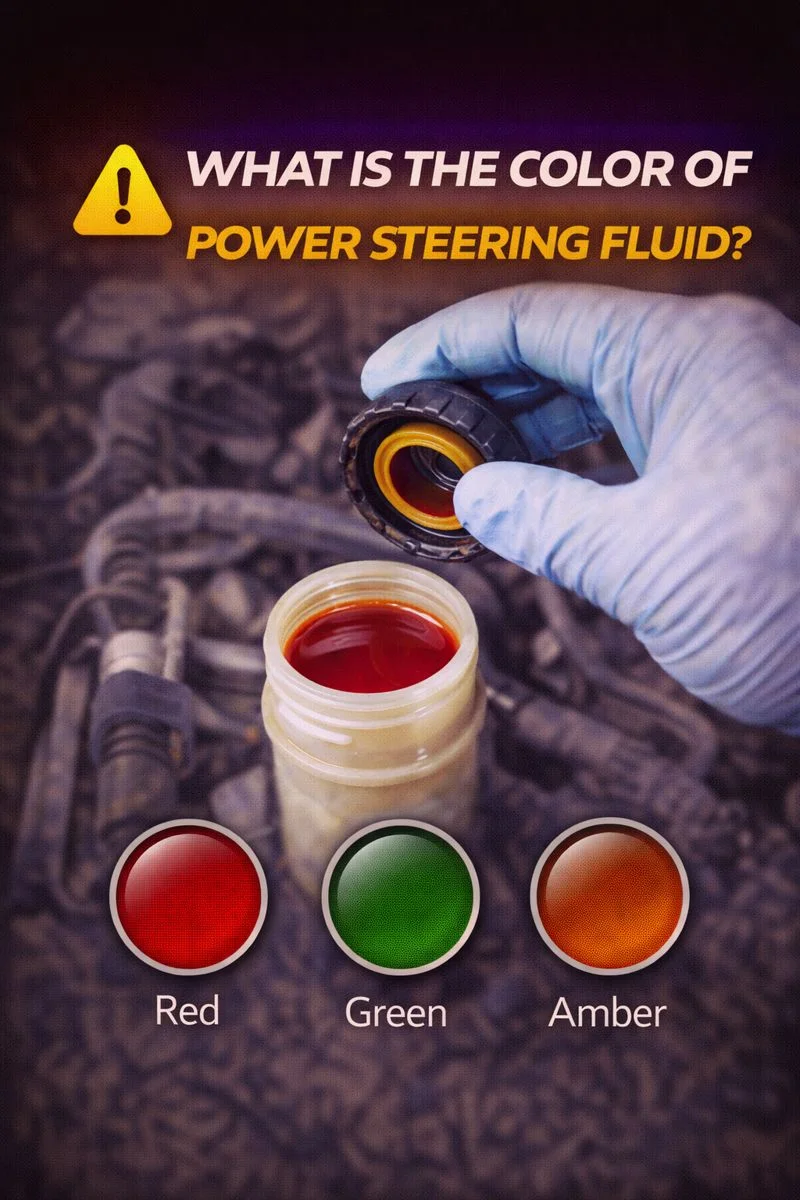
Power steering fluid is easy to overlook because it usually sits quietly in its reservoir, doing its job without noise or warning. Most drivers only think about it when steering suddenly feels heavy, makes noise, or leaves stains on the driveway.
When that moment comes, one of the first things people notice is the color of the fluid. It may look red, amber, brown, or even black, and each shade carries a message about what is happening inside the steering system.
Fluid color is not just cosmetic. It reflects heat exposure, contamination, age, and sometimes internal wear. Unlike engine oil, power steering fluid does not have a fixed replacement schedule in many vehicles, which makes visual inspection even more important.
A simple look at the fluid can reveal whether the system is healthy or heading toward trouble. This guide explains the normal colors of power steering fluid, how those colors change over time, what different shades mean, and when action should be taken to protect the steering system.
Table of Contents
Why Power Steering Fluid Color Matters
Power steering fluid serves multiple roles at once. It transfers hydraulic pressure, lubricates moving parts, and carries heat away from the pump and steering gear.
As the fluid works, it is exposed to heat, friction, and microscopic debris. Over time, these factors alter its color and clarity.
Color change is one of the earliest and most visible signs that fluid condition is changing. Paying attention to it helps prevent pump failure, seal damage, and steering rack wear.
Ignoring fluid color often means ignoring the health of the entire steering system.
The Most Common Power Steering Fluid Colors
Power steering fluid does not come in just one color. Different manufacturers use different formulations, and age changes appearance as well.
The most common colors include:
- Red or pink
- Amber or light brown
- Dark brown
- Black
- Milky or cloudy
Each color tells a different story about fluid condition.
Red Or Pink Power Steering Fluid
Red or pink is the most common color for fresh power steering fluid.
Many vehicles use fluid that is similar to automatic transmission fluid, which is naturally red. When new, it looks clean, bright, and transparent.
Red fluid usually indicates:
- Fresh or recently replaced fluid
- Proper lubrication and protection
- Normal operating condition
If the fluid remains red and clear, the system is generally healthy.
Amber Or Light Brown Power Steering Fluid
Amber or light brown fluid often appears after normal use.
This color change happens as the fluid absorbs heat and small amounts of wear material. At this stage, the fluid may still function well, but it is no longer new.
Amber fluid suggests:
- Moderate age
- Normal wear exposure
- Early stage of fluid breakdown
This is often the point where fluid service becomes beneficial, especially in older vehicles.
Dark Brown Power Steering Fluid
Dark brown fluid is a sign the fluid is overdue for replacement.
At this stage, heat has broken down the fluid’s additives, and contamination has increased. Lubrication and cooling efficiency are reduced.
Dark brown fluid may cause:
- Whining or groaning noises while steering
- Increased steering effort
- Accelerated pump and seal wear
Although the system may still operate, damage is progressing internally.
Black Power Steering Fluid And What It Means
Black power steering fluid is a warning sign.
This color indicates severe breakdown, excessive heat exposure, or contamination with rubber and metal particles. The fluid has lost most of its protective qualities.
Black fluid often accompanies:
- Loud pump noise
- Jerky or inconsistent steering
- Leaks caused by hardened seals
At this point, simply topping off fluid is not enough. A full flush and inspection are usually required.
Milky Or Cloudy Power Steering Fluid
Milky or cloudy fluid indicates contamination, usually from moisture or air.
Water can enter the system through damaged seals or condensation, especially in vehicles driven short distances frequently.
Cloudy fluid reduces lubrication and can cause corrosion inside the system.
This condition requires immediate attention, as moisture damages pumps and steering racks quickly.
Why Power Steering Fluid Changes Color Over Time
Fluid color changes are not random.
Heat is the primary factor. Power steering systems generate significant heat during operation, especially in city driving and tight steering maneuvers.
Friction inside the pump and steering gear also introduces tiny metal particles.
Seal wear contributes rubber residue, darkening the fluid further.
Together, these factors slowly alter fluid color and performance.
Difference Between Power Steering Fluid And Other Fluids
Some confusion arises because power steering fluid can resemble other fluids.
Automatic transmission fluid is usually red, similar to power steering fluid in many vehicles.
Engine oil starts amber and turns dark brown or black, but it feels thicker.
Brake fluid is usually clear or pale yellow and absorbs moisture easily.
Identifying fluid by location and smell helps avoid mistakes.
How To Check Power Steering Fluid Color Correctly
Checking fluid color is simple but should be done carefully.
Use the reservoir dipstick or look through the translucent reservoir if equipped.
Compare the fluid color against the reservoir or a clean white surface.
Avoid checking immediately after driving, as hot fluid may appear darker than it actually is.
Consistency matters as much as color. Gritty or foamy fluid signals trouble.
What Power Steering Fluid Smell Can Tell You
Smell adds another layer of information.
Healthy fluid smells mild or slightly oily.
Burnt fluid smells sharp or acrid, similar to burnt oil. This often accompanies dark brown or black color.
A burnt smell confirms overheating and accelerated breakdown.
Color and smell together paint a clearer picture than either alone.
How Fluid Color Affects Steering Feel
As fluid darkens, steering feel often changes.
Fresh fluid provides smooth, quiet operation.
Aged fluid may cause:
- Whining during turns
- Slight stiffness
- Vibration in the steering wheel
Severely degraded fluid can cause sudden loss of assist, especially at low speeds.
Steering feel changes usually lag behind color change, meaning damage may already be happening.
Does Power Steering Fluid Color Vary By Vehicle Brand
Yes, fluid color can vary by manufacturer.
Some brands specify clear or amber hydraulic fluid rather than red.
Always check the owner’s manual before adding fluid, as using the wrong type can damage seals.
Color alone does not identify fluid type, but it does indicate condition.
Matching specification is more important than matching color.
Mixing Different Power Steering Fluids And Color Changes
Mixing incompatible fluids can cause color changes and performance issues.
Some fluids react chemically, causing cloudiness or rapid darkening.
Mixed fluids may foam or lose lubricating properties.
If mixed fluid is suspected, a full system flush is the safest solution.
How Long Power Steering Fluid Should Stay Clean
There is no universal replacement interval, but fluid condition usually changes gradually.
In many vehicles, fluid lasts 60,000 to 100,000 miles before noticeable darkening.
Heavy steering use, hot climates, and towing shorten fluid life.
Regular inspection is more reliable than mileage alone.
Why Many Vehicles Lack Power Steering Fluid Service Schedules
Manufacturers often label power steering fluid as “lifetime,” but this does not mean permanent.
Lifetime usually refers to warranty expectations, not vehicle lifespan.
Fluid still degrades, just more slowly than engine oil.
Ignoring it simply transfers cost from maintenance to repair.
When A Fluid Flush Makes Sense
A flush replaces most of the old fluid with new fluid.
This is recommended when:
- Fluid is dark brown or black
- Steering noise increases
- Pump or rack replacement is planned
A flush restores lubrication and reduces wear immediately.
However, flushing very old systems should be done carefully to avoid dislodging debris suddenly.
Topping Off Versus Replacing Fluid
Topping off adds fluid but does not remove contamination.
It may help temporarily if the level is low, but color and debris remain.
Replacing or flushing addresses the root issue.
Topping off dark fluid often delays necessary service rather than solving it.
Power Steering Fluid Color And Leak Diagnosis
Fluid color helps identify leaks.
Red or amber stains under the front of the car often indicate power steering leaks.
Dark stains may suggest older leaks that have collected dirt.
Identifying the fluid helps locate the leaking system quickly.
How Ignoring Fluid Color Leads To Costly Repairs
Pump and rack replacements are expensive.
Most failures begin with fluid breakdown that goes unnoticed.
Replacing fluid early costs little compared to replacing major components.
Color is one of the easiest warning signs to spot.
Preventing Power Steering Fluid Breakdown
Simple habits extend fluid life:
- Avoid holding the steering wheel at full lock
- Address leaks promptly
- Keep the reservoir sealed properly
- Use the correct fluid type
Reducing heat and contamination slows color change significantly.
Common Myths About Power Steering Fluid Color
Some believe dark fluid is normal and harmless. It is not.
Others think power steering fluid never needs service. It does.
Another myth is that any red fluid will work. Incorrect fluid causes damage.
These misconceptions lead to avoidable repairs.
When Professional Inspection Is Helpful
If fluid is black, milky, or smells burnt, inspection is recommended.
Technicians can assess pump noise, pressure, and seal condition.
Catching issues early prevents cascading failures.
Professional checks confirm whether fluid service alone is enough.
Final Thoughts
The color of power steering fluid offers a clear window into the health of the steering system. Red or pink fluid points to a system in good shape, while amber suggests age. Dark brown or black fluid signals overdue service, and milky fluid warns of contamination. These changes happen gradually, long before steering failure becomes obvious.
Checking fluid color takes only minutes and requires no special tools, yet it can prevent some of the most expensive steering repairs. Treating fluid color as a maintenance signal rather than an afterthought keeps steering smooth, quiet, and reliable for the long run.

- How To Clean Headlights With WD40 Safely And Easily - May 8, 2026
- How Fast Do Airbags Deploy? Complete Safety Guide - May 8, 2026
- Where Does Antifreeze Go? Complete Car Coolant Guide - May 8, 2026
