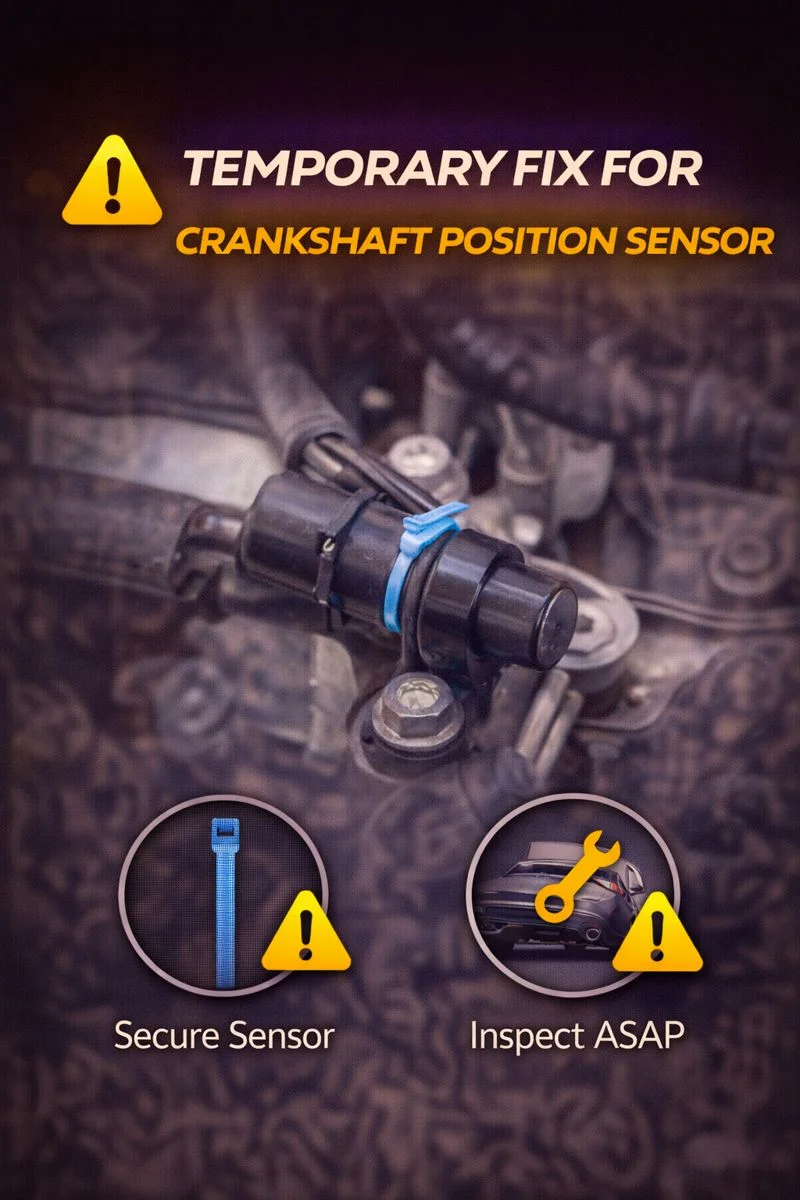
The crankshaft position sensor plays a quiet but critical role in how an engine runs. When it starts to fail, the symptoms often feel dramatic and unpredictable.
A car may stall without warning, refuse to start when hot, or shut off while driving and then restart after cooling down. These moments create panic, especially when the vehicle is far from home or help is not immediately available.
Because the crankshaft position sensor is tied directly to ignition timing and fuel delivery, even a small signal problem can stop the engine entirely. Replacement is the only real cure, but many drivers look for a temporary fix to get the car home, reach a repair shop, or avoid being stranded.
Temporary solutions are not meant to last, but in certain situations, they can reduce symptoms long enough to restore basic operation.
This guide explains what the crankshaft position sensor does, why it fails, and which short-term fixes may help in an emergency without causing additional damage.
Table of Contents
What The Crankshaft Position Sensor Controls
The crankshaft position sensor tracks the position and speed of the crankshaft as it rotates. This information is sent to the engine control unit, which uses it to manage spark timing, fuel injection, and engine synchronization.
If the sensor signal disappears or becomes unreliable, the engine computer loses track of when to fire the spark plugs or inject fuel. In many vehicles, this results in immediate stalling or a complete no-start condition.
Because this sensor provides a core engine signal, the engine cannot simply ignore it or compensate easily when it fails.
Why Crankshaft Position Sensors Fail Over Time
Crankshaft position sensors live in a harsh environment. They are often mounted near the engine block, close to heat, vibration, and oil contamination.
Common reasons for failure include:
- Heat-related internal breakdown
- Wiring insulation damage
- Oil leaks contaminating the sensor
- Loose or corroded electrical connectors
- Internal electronic wear
Many sensors work intermittently before failing completely. This explains why the engine may restart after cooling down or behave differently at different temperatures.
Symptoms That Often Appear Before Total Failure
Crankshaft sensor problems rarely appear all at once.
Early signs may include:
- Random stalling while driving
- Engine cutting out at stoplights
- Long cranking before starting
- No start when hot but starts when cold
- Sudden loss of RPM signal
These symptoms may come and go, creating false confidence that the problem has fixed itself.
Why Temporary Fixes Are Sometimes Possible
Some crankshaft sensor failures are caused by heat expansion, poor electrical contact, or wiring stress rather than complete internal damage.
In these cases, temporary measures may improve signal consistency enough for short-term operation.
These fixes do not repair the sensor. They simply reduce the conditions causing signal loss.
Temporary fixes should only be used to move the vehicle to a safe location or repair facility.
Cooling The Sensor To Restore Signal
Heat-related failure is one of the most common crankshaft sensor problems.
When the sensor overheats, internal resistance changes and signal output drops. Cooling it may restore operation temporarily.
Ways this sometimes helps include:
- Letting the engine cool completely before restarting
- Parking in shade and opening the hood
- Using cool airflow around the sensor area
Some drivers find the engine restarts normally after cooling, only to fail again once hot.
This confirms heat sensitivity and points strongly toward sensor replacement.
Improving Electrical Connection At The Sensor
Poor electrical contact can interrupt the sensor signal.
Temporary steps that may help include:
- Unplugging and reconnecting the sensor connector
- Cleaning visible dirt or oil from the connector
- Ensuring the connector locks firmly into place
Loose connectors can vibrate just enough to break the signal. Reseating the plug may restore contact briefly.
Avoid forcing connectors, as damaged pins create bigger problems.
Checking And Relieving Wiring Strain
Sensor wiring can become brittle from heat and age.
If the wire harness is stretched tightly or rubbing against metal, movement may break the signal intermittently.
Temporary relief may include:
- Gently repositioning the harness
- Securing loose wiring away from hot or moving parts
- Preventing tension on the connector
This does not fix internal wire damage, but it may reduce signal loss during short trips.
Cleaning Oil Contamination From The Sensor Area
Oil leaks near the crankshaft sensor are common.
Oil can seep into the connector or coat the sensor body, interfering with signal clarity.
A temporary improvement may come from:
- Cleaning oil residue from the sensor and connector
- Wiping away heavy grime around the mounting area
This helps only if contamination is light. Heavy oil intrusion usually means the sensor has already been damaged.
Resetting The Engine Control System Temporarily
In some cases, the engine computer stores fault conditions that affect starting behavior.
Disconnecting the battery for a short time can reset adaptive values and clear temporary faults.
This may allow the engine to start again if the sensor signal returns briefly.
This step does not fix the sensor and should not be repeated frequently, but it may help in an emergency.
Why Heat So Often Makes The Problem Worse
Heat affects electronics by increasing resistance and altering signal output.
As engine temperature rises, internal components inside the sensor expand. If the sensor is already weakened, the signal may fall outside acceptable range.
This explains why:
- The engine stalls after warming up
- Restarting is difficult when hot
- Cooling temporarily restores function
Once heat sensitivity appears, failure usually progresses quickly.
Temporary Fixes That Should Be Avoided
Some suggestions found online create more harm than benefit.
Avoid:
- Hitting or tapping the sensor
- Spraying harsh chemicals into connectors
- Splicing wires without proper tools
- Using sealants or tape near sensor tips
These actions can damage wiring, sensors, or engine components permanently.
Temporary does not mean careless.
How Long Temporary Fixes Might Last
Temporary improvements vary widely.
Some last minutes, others may last days or weeks depending on driving conditions and sensor condition.
There is no predictable timeline. A sensor that works today may fail completely tomorrow.
Relying on a temporary fix for daily driving is risky and unreliable.
Why Replacement Is Always The Real Solution
Crankshaft position sensors are not serviceable.
Once internal components degrade, replacement is the only dependable fix.
Continuing to drive with a failing sensor risks:
- Unexpected stalling
- Loss of power steering and braking assist
- Being stranded in unsafe locations
Replacing the sensor restores reliable engine timing and prevents secondary issues.
How Replacement Differs From Temporary Measures
Replacement removes the cause rather than managing symptoms.
A new sensor provides:
- Stable RPM signal
- Consistent starting
- Proper fuel and ignition timing
Temporary measures only mask the problem under limited conditions.
When Temporary Fixes Are Reasonable
Temporary fixes make sense when:
- You are far from repair facilities
- The vehicle must be moved short distances
- Replacement parts are not immediately available
They are not a substitute for repair and should not be treated as such.
Diagnosing The Sensor Before Replacement
Before replacing the sensor, confirmation is important.
Professional diagnosis may include:
- Scanning for engine speed signal loss
- Monitoring live RPM data during cranking
- Checking sensor resistance values
- Inspecting wiring continuity
Diagnosis prevents unnecessary replacement and confirms the root cause.
Cost Perspective On Sensor Replacement
Crankshaft position sensors are relatively affordable compared to many engine components.
Labor varies depending on location and vehicle design, but replacement is usually straightforward.
Delaying replacement often leads to towing costs that exceed repair cost.
Early replacement is almost always cheaper.
Preventing Repeat Sensor Failure
To reduce future problems:
- Repair oil leaks near the sensor
- Keep wiring secured and protected
- Avoid overheating the engine
- Use quality replacement sensors
Environmental protection extends sensor life significantly.
Why Ignoring The Problem Is Risky
A failing crankshaft sensor does not improve on its own.
Each stall increases risk, especially in traffic or at intersections.
Temporary fixes may reduce symptoms, but they do not restore reliability.
At some point, the sensor will stop working completely.
Final Thoughts
Temporary fixes for crankshaft position sensor problems can help in short, controlled situations, but they are not true repairs. Cooling the sensor, improving electrical contact, or relieving wiring stress may restore operation long enough to reach safety or schedule service. These measures work only when failure is still intermittent and heat or connection related.
Once symptoms appear regularly, replacement becomes unavoidable. The crankshaft position sensor is too critical to engine operation to ignore for long. Addressing the issue early prevents breakdowns, protects engine timing, and restores confidence every time the key is turned.

- How Families in UAE Manage Changing Vehicle Needs - March 4, 2026
- How Many Axles On A Car And What They Do - March 2, 2026
- Metal Shavings In Oil Causes And What It Means - March 2, 2026