A car battery is one of those parts most drivers only think about when something goes wrong. One day the engine cranks slowly, the next day it doesn’t start at all, and suddenly the battery becomes the center of attention.
Charging a car battery sounds simple, but the time it takes can vary more than most people expect. Some batteries recover in an hour, while others need an entire day to reach a healthy level again.
The confusion usually comes from not knowing what affects charging time. Battery size, charger type, how drained the battery is, and even temperature all play a role. Charging too fast or for too long can shorten battery life, while charging too little may leave you stranded again.
This guide explains how long it really takes to charge a car battery, what influences that time, and how to charge it safely without guesswork. The goal is to help you get reliable starts without damaging the battery or wasting time.
Table of Contents
What Charging A Car Battery Actually Means
Charging a car battery is not just about putting power back in. A typical car battery stores energy in chemical form. When it discharges, that chemical balance shifts. Charging reverses that process, slowly restoring the battery’s ability to deliver strong current for starting the engine.
Most modern cars use 12-volt lead-acid batteries. These batteries are designed to provide a large burst of power for a short time, not steady power for long periods. Because of that design, they need to be charged in a controlled way.
Pushing power in too quickly creates heat and stress inside the battery. Charging too slowly may not fully restore capacity if the battery has been deeply discharged.
The Main Factors That Decide Charging Time
Charging time is never one fixed number. Several factors combine to determine how long a battery needs.
The first factor is how empty the battery is. A battery that is slightly low after sitting for a few days charges much faster than one that has been completely drained by leaving lights on overnight. The deeper the discharge, the longer the charging process.
Battery size also matters. Batteries are rated in amp-hours. A small car battery holds less energy than a large SUV or truck battery. Larger batteries take longer to charge simply because there is more capacity to refill.
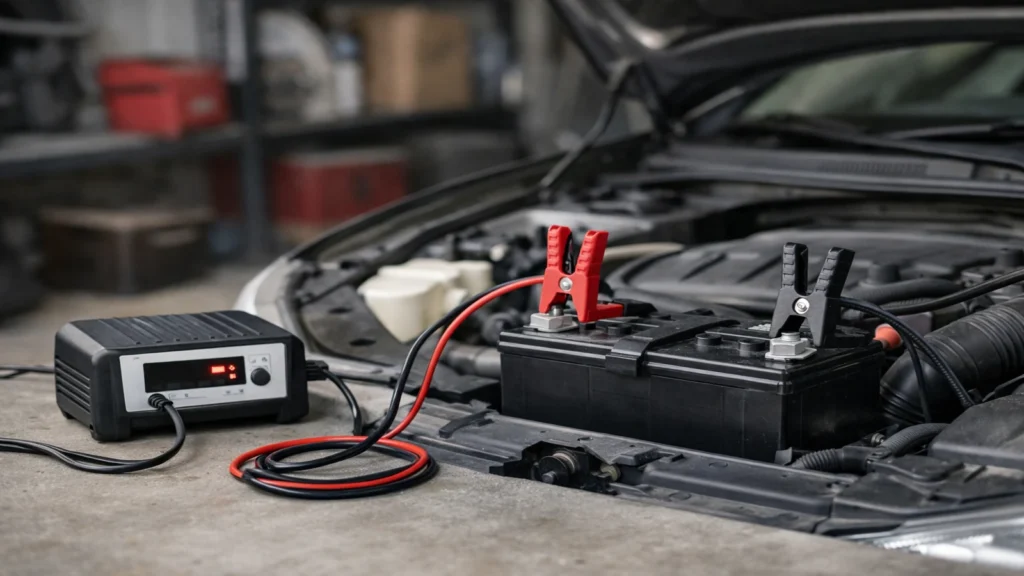
The type of charger makes a big difference. A low-amp trickle charger adds power slowly and gently. A higher-amp charger refills the battery faster but must be used carefully. Smart chargers adjust the charging rate automatically, which affects total charging time.
Temperature plays a role as well. Cold batteries charge more slowly because chemical reactions inside the battery happen at a slower rate. Very hot conditions can also slow charging because the charger may reduce output to protect the battery.
Charging Time Based On Charger Type
A low-amp trickle charger, usually rated at 1 to 2 amps, is designed for slow and steady charging. With this type of charger, a mostly drained battery can take 12 to 24 hours to charge fully. This method is gentle and helps extend battery life, especially for older batteries.
Mid-range chargers rated around 5 to 10 amps are commonly used in home garages. With these chargers, a partially discharged battery may charge in 4 to 8 hours. A deeply discharged battery may need closer to 10 to 12 hours.
High-amp chargers, often rated at 15 to 30 amps, reduce charging time significantly. A battery may reach a usable level in 1 to 3 hours. However, fast charging generates more heat and stress, so it is best used only when necessary and under supervision.
Smart chargers change behavior as the battery fills. They may start fast and slow down automatically as the battery approaches full charge. This means the first part of charging happens quickly, but the final stage can take longer to complete.
Charging Time Based On Battery Condition
A healthy battery charges more efficiently than one that is aging or damaged. If the battery plates are sulfated or worn, charging takes longer and may never reach full capacity. This often leads people to believe the battery needs more charging time, when the real issue is battery health.
A battery that has been completely drained may appear to charge quickly at first. Voltage rises early, but true capacity takes longer to restore. That is why stopping the charge too soon can result in another no-start situation.
If a battery struggles to hold charge even after long charging times, replacement is usually the better option. Charging longer will not fix internal damage.
Charging A Battery By Driving
Many drivers assume that driving will fully recharge a weak battery. While driving does add charge through the alternator, it is not always enough.
A short drive of 15 to 20 minutes may only replace the energy used to start the engine. It does not usually restore a battery that was already low. Longer highway drives of 45 minutes to an hour can add more charge, but this still depends on alternator output and electrical load.
Modern cars place heavy demands on the electrical system. Lights, climate control, infotainment, and driver assistance systems all consume power. This reduces how much energy is available to recharge the battery while driving.
Driving is best viewed as maintenance charging, not recovery charging. If a battery is significantly discharged, using a charger is far more effective.
How To Tell When A Battery Is Fully Charged
Most smart chargers show charging status through indicator lights or digital displays. A full charge is usually indicated when the charger switches to maintenance or float mode.
Voltage readings provide another clue. A fully charged 12-volt battery typically reads around 12.6 to 12.8 volts at rest. Lower readings suggest incomplete charging.
Cranking behavior is also a sign. A fully charged battery turns the engine quickly and confidently. Slow or hesitant cranking after charging suggests either incomplete charging or a weak battery.
Common Charging Mistakes That Affect Time And Battery Life
One common mistake is stopping the charge too early. Seeing the charger indicate “charged” does not always mean the battery has reached full capacity. Many chargers reach a usable level first, then slowly top off the battery.
Another mistake is using the highest charging setting all the time. Fast charging is convenient, but repeated high-amp charging shortens battery life.
Charging in extreme temperatures is also problematic. In cold conditions, charging takes longer. In hot conditions, overcharging becomes a risk.
Leaving a basic charger connected too long can also cause damage if it does not have automatic shutoff. Overcharging leads to fluid loss and internal heat buildup.
How Long To Charge In Common Situations
If the battery is slightly low, such as after sitting unused for a week, 2 to 4 hours on a mid-range charger is often enough.
If the battery is drained but still able to crank slowly, 6 to 10 hours of charging is typical.
If the battery is completely dead, expect 12 to 24 hours on a low-amp charger for a full and safe charge.
If you only need to start the car, 30 minutes to 1 hour on a higher-amp charger may provide enough power, but this should be followed by longer charging or driving.
Safety Matters During Charging
Always charge in a well-ventilated area. Batteries release gas during charging, especially when nearing full capacity.
Ensure the charger is set correctly for the battery type. Incorrect settings can damage the battery or create safety hazards.
Check battery cables and terminals before charging. Loose or corroded connections slow charging and create heat.
Never charge a visibly damaged or leaking battery. In those cases, replacement is the safest choice.
How Long Charging Takes In Cold Weather
Cold temperatures slow chemical reactions inside the battery. This means charging takes longer, sometimes significantly longer.
A battery that charges fully in 8 hours at room temperature may need 12 hours or more in cold conditions. Using a lower amp setting in cold weather helps prevent stress and improves long-term performance.
When Charging Time Becomes A Warning Sign
If charging always takes much longer than expected, or if the battery never seems to reach full charge, the battery may be nearing the end of its life.
Frequent deep discharges also increase charging time and reduce capacity. Replacing the battery is often more cost-effective than repeated long charging sessions.
Preventing Long Charging Sessions In The Future
Regular driving helps keep the battery topped off. For vehicles driven infrequently, a maintenance charger is a good solution.
Keeping battery terminals clean improves charging efficiency.
Replacing an aging battery before it fails completely avoids emergency charging situations.
Final Thoughts
Charging a car battery is not a one-size-fits-all process. The time required depends on how low the battery is, how large it is, and what type of charger is used. In general, charging can take anywhere from one hour for a quick boost to a full day for a deep and gentle recharge.
Patience during charging pays off. Allowing the battery enough time to charge fully improves reliability and extends its life. Rushing the process may get the car started sooner, but it often shortens battery lifespan. Knowing how long to charge and why that time matters helps ensure consistent starts and fewer surprises down the road.

- Broken Belt In Tire Symptoms Causes And Safe Fix - May 4, 2026
- Car Starts Sometimes And Sometimes It Doesn’t Causes And Fix - May 4, 2026
- Synthetic Oil Change Cost At Jiffy Lube In 2026 - May 4, 2026