
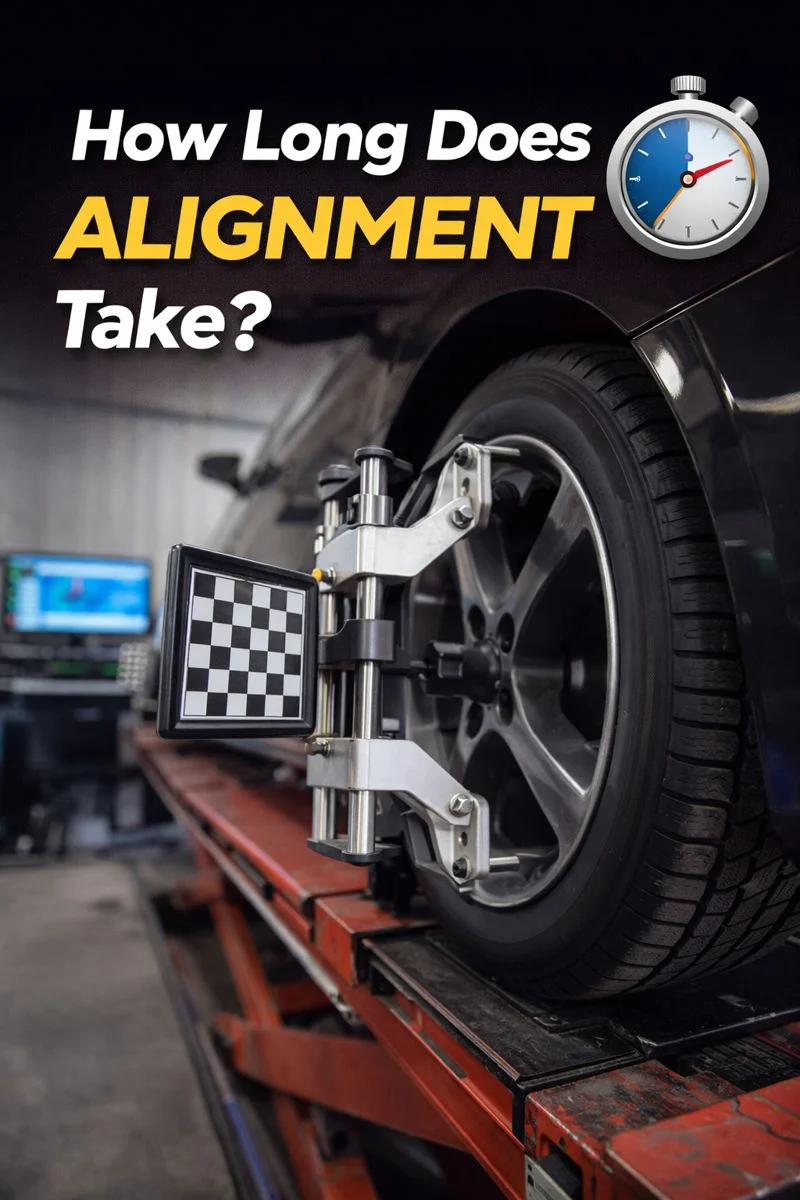
Wheel alignment is one of those maintenance services everyone hears about, but very few people truly understand. It sounds simple on the surface—adjust the wheels so they point in the right direction—but behind the scenes, it is a precise mechanical process that directly affects safety, tire life, steering response, and overall vehicle stability.
One of the most common questions drivers ask before scheduling this service is not about cost or benefits, but time. They want to know how long the car will be in the shop and whether it fits into a busy day.
Having worked closely with alignment technicians and observed hundreds of alignments performed on different vehicles, I can say with confidence that the answer is not a single number.
The time required depends on the vehicle, its condition, the type of alignment, and the equipment being used. This article breaks everything down in a clear, practical way so you know exactly what to expect and why alignment time varies so much.
Table of Contents
What Wheel Alignment Really Means
Wheel alignment refers to adjusting the angles of the wheels so they match manufacturer specifications. These angles determine how the tires contact the road and how the vehicle tracks in a straight line.
The three primary angles involved are camber, caster, and toe. Each plays a different role in stability, steering return, and tire wear. Proper alignment ensures that all four wheels work together rather than fighting each other.
Because these adjustments are measured in fractions of degrees, alignment is a precision task rather than a quick mechanical tweak.
Average Time Required For A Wheel Alignment
In most modern workshops, a standard wheel alignment takes 30 to 60 minutes. This timeframe assumes the vehicle has no underlying suspension issues and adjustments can be made without resistance.
For many cars, especially newer models with straightforward adjustment points, the process is closer to the 30-minute mark. More complex vehicles or those with wear-related complications usually require additional time.
This estimate includes inspection, measurement, adjustment, and a final verification drive in some shops.
Why Alignment Time Is Not The Same For Every Vehicle
No two vehicles arrive at an alignment bay in the same condition. Several variables influence how long the process takes.
Suspension design is a major factor. Some vehicles allow easy access to adjustment points, while others require partial disassembly. Corrosion or seized components can slow the process significantly.
Vehicle size also matters. Aligning a compact car is generally faster than aligning a large SUV or truck due to weight and component access.
Two-Wheel Alignment Versus Four-Wheel Alignment Time
Not all alignments are the same.
A two-wheel alignment, typically performed on older vehicles with solid rear axles, focuses only on the front wheels. This usually takes 20 to 40 minutes.
A four-wheel alignment adjusts all four wheels and is more common on modern vehicles. Because it involves additional measurements and adjustments, it generally takes 40 to 60 minutes or more.
Most modern cars benefit from four-wheel alignment, even if the rear wheels are not adjustable.
How Modern Alignment Equipment Affects Time
Advances in alignment technology have significantly reduced service time. Older systems relied on manual measurements and repeated adjustments. Modern computerized alignment machines use sensors, cameras, and digital readouts.
These systems quickly identify misalignment and guide technicians with real-time data. As a result, accurate adjustments can be made faster and with greater consistency.
That said, advanced equipment does not eliminate the need for skilled labor. Experience still plays a major role in efficiency.
Inspection Time Before Actual Adjustment
Before any adjustment begins, a proper alignment includes a thorough inspection. This step alone can take 10 to 15 minutes.
Technicians check suspension components, bushings, ball joints, tie rods, and steering parts. If excessive play or damage is found, alignment may be postponed until repairs are completed.
Skipping this inspection can result in inaccurate alignment and wasted time, so reputable shops never rush this step.
How Worn Parts Can Extend Alignment Time
One of the most common reasons alignments take longer than expected is worn suspension or steering components.
If bolts are seized due to rust, freeing them safely takes time. In some cases, components must be heated or replaced before adjustments can be made.
When parts are excessively worn, alignment may not be possible at all until repairs are completed. This can turn a one-hour service into a multi-day process.
Alignment Time For New Vehicles
Newer vehicles generally require less time for alignment. Suspension components are clean, bolts move freely, and factory specifications are readily available in alignment systems.
In many cases, alignment on a new or well-maintained vehicle can be completed in under 30 minutes.
However, even new vehicles can arrive with alignment issues due to transport or road conditions, so time still varies.
Alignment Time After Suspension Repairs
When alignment is performed after suspension work, time requirements often increase.
Replacing components such as control arms, struts, or steering racks changes alignment angles significantly. Technicians may need additional time to dial in settings precisely.
In these cases, alignment can take 60 to 90 minutes, especially if multiple adjustments interact with each other.
Does Tire Size Or Modification Affect Alignment Time
Modified vehicles often require extra attention.
Larger wheels, aftermarket suspension kits, or altered ride height can complicate alignment. Some factory adjustment ranges may no longer apply, requiring creative solutions or aftermarket components.
Aligning modified vehicles typically takes longer due to added measurements and careful fine-tuning.
How Technician Experience Influences Time
Experience matters more than most people realize. A skilled alignment technician can quickly identify problem areas, make efficient adjustments, and verify results without unnecessary repetition.
Less experienced technicians may take longer, even with the same equipment. This does not mean the result is inferior, but time differences can be noticeable.
High-quality shops invest heavily in training because efficiency and accuracy go hand in hand.
Waiting Time Versus Actual Working Time
It is important to separate working time from waiting time.
While alignment itself may take under an hour, waiting time depends on shop workload, appointment scheduling, and unexpected complications.
Busy workshops may require vehicles to wait before being brought into the alignment bay. Planning ahead and booking appointments reduces delays.
Can Alignment Be Done While You Wait
In many cases, yes. Most standard alignments are completed within an hour, making them suitable for wait-in-shop service.
However, if inspection reveals worn parts or seized adjustments, the service may take longer than expected. In such situations, shops often recommend rescheduling after repairs.
Alignment Time For Trucks And SUVs
Larger vehicles generally take longer to align. Increased weight, heavier components, and limited adjustment access all contribute.
Truck alignments can take 60 to 90 minutes, especially if the vehicle has four-wheel drive or adjustable rear suspension.
Fleet or commercial vehicles may require even more time due to specialized setups.
How Often Alignment Needs To Be Checked
While this article focuses on time, frequency also affects how alignment fits into maintenance planning.
Most professionals recommend checking alignment once a year or whenever new tires are installed. Doing so prevents severe misalignment that can lengthen future alignment time.
Regular checks usually result in quicker adjustments because angles are closer to specification.
Common Reasons Alignment Takes Longer Than Expected
Several factors can unexpectedly extend alignment time:
- Rusted or seized adjustment bolts
- Worn suspension components
- Modified suspension geometry
- Incorrect tire pressure before alignment
- Bent wheels or damaged suspension parts
Each of these issues requires attention before accurate alignment is possible.
Is Faster Always Better When It Comes To Alignment
Speed alone should not be the goal. A rushed alignment can miss subtle issues or skip proper verification steps.
A quality alignment balances efficiency with precision. Taking a few extra minutes to verify results ensures longer-lasting benefits and prevents uneven tire wear.
What Happens If Alignment Is Rushed Or Skipped
Skipping alignment or rushing the process can lead to:
- Uneven tire wear
- Steering pull
- Reduced fuel efficiency
- Poor handling and stability
In the long run, improper alignment costs more time and money than doing it correctly the first time.
How To Prepare Your Vehicle To Save Time
A few simple steps can help reduce alignment time:
- Ensure tires are properly inflated
- Remove heavy items from the vehicle
- Address obvious suspension noises beforehand
- Inform the technician of recent repairs
Preparation allows technicians to focus on alignment rather than troubleshooting unrelated issues.
Professional Insight From Workshop Experience
From years of observing real alignment work, one thing stands out: vehicles that receive regular maintenance align faster and more accurately.
Neglected suspension systems create resistance, uncertainty, and delays. Well-maintained vehicles often glide through the process with minimal adjustment.
Time efficiency is often a reflection of long-term care rather than just shop speed.
Final Thoughts
Wheel alignment is not a one-size-fits-all service, and the time required reflects that reality. While most alignments take between 30 and 60 minutes, factors such as vehicle design, condition, and previous maintenance can significantly influence the process.
Understanding what happens during alignment and why time varies helps set realistic expectations. More importantly, it highlights the value of doing the job thoroughly rather than quickly. A properly aligned vehicle rewards that time investment with better handling, longer tire life, and greater confidence on the road.

- Broken Belt In Tire Symptoms Causes And Safe Fix - May 4, 2026
- Car Starts Sometimes And Sometimes It Doesn’t Causes And Fix - May 4, 2026
- Synthetic Oil Change Cost At Jiffy Lube In 2026 - May 4, 2026