
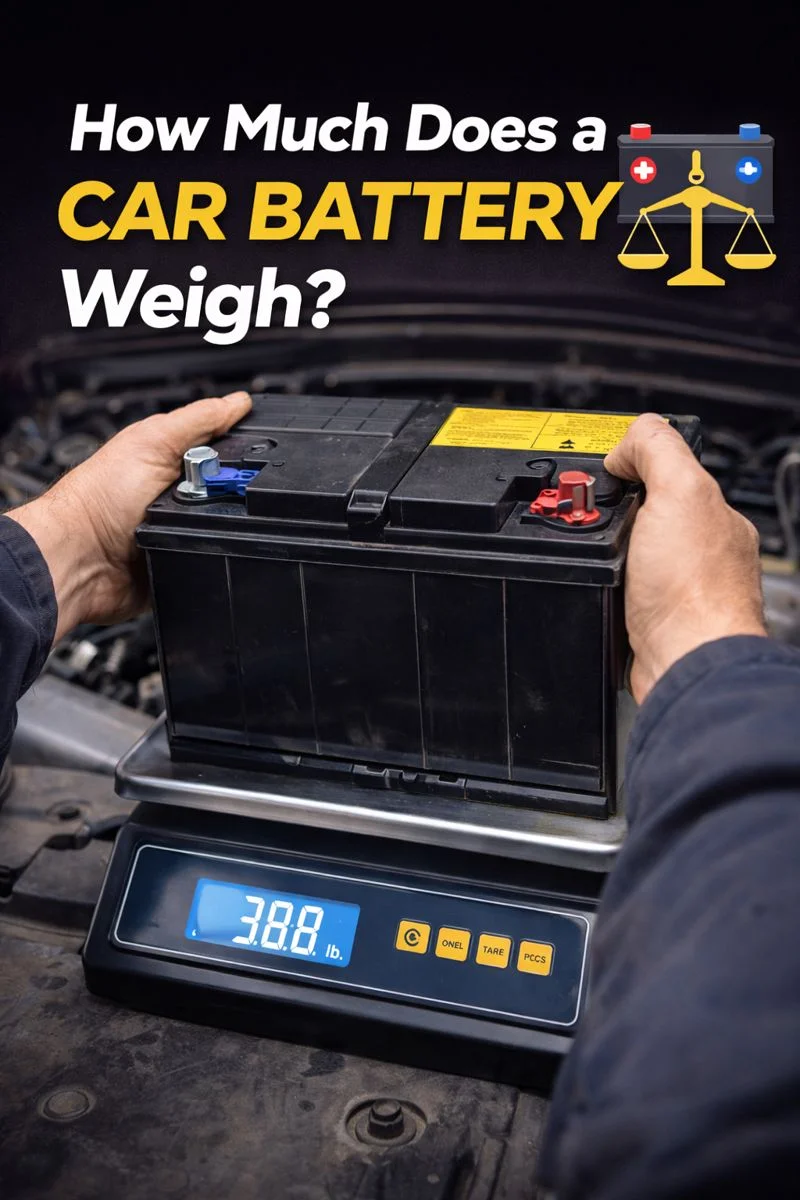
A car battery is one of those components most people interact with but rarely think about in detail. You notice it when the engine struggles to start, when it needs replacement, or when you lift one and realize it is heavier than expected.
That weight is not accidental. Every kilogram inside a battery serves a purpose, from storing electrical energy to delivering reliable power in different weather conditions.
Understanding how much a car battery weighs is not just a matter of curiosity; it helps with safe handling, correct replacement, vehicle balance awareness, and even shipping or recycling decisions.
Over the years, I have handled hundreds of batteries across different vehicles, from small city cars to large SUVs and commercial vehicles.
One thing that surprises almost everyone is how much the weight can vary. This guide explains car battery weight in a clear, practical way, covering different types, sizes, materials, and real-world factors that influence how heavy a battery actually is.
Table of Contents
Why Car Battery Weight Matters More Than You Think
Battery weight is not just a number on a specification sheet. It affects several practical aspects of vehicle ownership.
First, handling safety is important. Lifting a battery incorrectly can strain your back or cause injury. Second, the correct battery weight often correlates with capacity and power output. Installing a battery that is too light may indicate lower internal capacity, while an excessively heavy one may not fit properly.
Battery weight also plays a role in vehicle balance. Manufacturers design engine bays with specific weight distribution in mind. While a few kilograms may not sound significant, repeated changes can affect mounting points and brackets over time.
Average Weight Of A Standard Car Battery
Most passenger cars use a lead-acid battery. This traditional design has been around for decades and remains popular because it is reliable and affordable.
On average, a standard car battery weighs between 12 kilograms and 20 kilograms. In pounds, this is roughly 26 to 44 pounds. Compact cars tend to be on the lower end of this range, while larger sedans and SUVs usually fall closer to the upper end.
The reason for this variation lies in internal construction. More lead plates and electrolyte solution mean more energy storage, but also more weight.
Why Some Car Batteries Are Heavier Than Others
Two batteries may look similar from the outside yet feel completely different when lifted. Several factors explain this difference.
The most important factor is capacity. Batteries with higher reserve capacity contain more lead plates and thicker internal components. These materials are dense and heavy.
Cold cranking performance also influences weight. Batteries designed to deliver strong starting power in cold climates often include additional internal material to maintain performance under stress.
Finally, casing design plays a role. Reinforced housings add durability but also add weight.
Weight Differences By Battery Type
Not all car batteries are built the same. The technology inside significantly affects how heavy they are.
Conventional Lead-Acid Batteries
These are the most common and generally the heaviest relative to their size. The lead plates account for most of the weight. Expect these to sit comfortably within the 12 to 20 kilogram range.
Absorbed Glass Mat Batteries
These batteries use fiberglass mats instead of liquid electrolyte. They are often slightly heavier than traditional versions due to denser internal packing, typically weighing between 15 and 23 kilograms.
Lithium-Based Car Batteries
Lithium batteries are much lighter. Some weigh as little as 6 to 10 kilograms. However, they are usually found in performance or specialized vehicles due to higher cost.
How Vehicle Size Influences Battery Weight
Vehicle size and engine displacement strongly affect battery selection.
Small hatchbacks usually require compact batteries with lower capacity, which naturally weigh less. Mid-size sedans need moderate capacity, increasing weight slightly. Large SUVs, trucks, and vehicles with diesel engines often require significantly heavier batteries to handle higher starting loads.
Electrical demand also matters. Vehicles with advanced electronics, large infotainment systems, and multiple sensors often require heavier batteries to support consistent voltage delivery.
Materials Inside A Car Battery And Their Weight Contribution
Understanding what is inside a battery explains why it feels so heavy.
Lead is the primary contributor. It is extremely dense, which makes it ideal for energy storage but also adds significant mass. Electrolyte fluid contributes additional weight, though much less than lead.
Plastic casing and internal separators add minor weight but are necessary for durability and safety.
When you lift a battery, you are essentially lifting a compact block of dense metal and liquid, tightly packed into a small space.
Does A Heavier Battery Mean Better Performance
Not always. While heavier batteries often have higher capacity, performance depends on design, quality, and application.
A lighter battery with advanced internal construction can outperform a heavier, outdated design. This is especially true with modern battery technologies.
What matters most is choosing a battery that matches the vehicle’s electrical requirements rather than focusing only on weight.
Typical Battery Weights By Vehicle Category
To give a clearer picture, here is a general overview:
- Small cars: 10 to 14 kilograms
- Mid-size sedans: 14 to 18 kilograms
- SUVs and crossovers: 18 to 22 kilograms
- Trucks and diesel vehicles: 20 to 30 kilograms
These figures are approximate but reflect common real-world ranges.
How Battery Weight Affects Installation And Replacement
Battery replacement is one of the few maintenance tasks many owners attempt themselves. Knowing the weight helps prepare for the task.
Heavier batteries require careful lifting technique. Using both hands, keeping the back straight, and lifting slowly reduces injury risk.
Some vehicles have batteries located in less accessible areas, making weight even more relevant. In these cases, professional installation may be safer.
Battery Weight And Shipping Considerations
Battery weight also affects transportation. Shipping regulations often account for weight and hazardous materials.
Heavier batteries cost more to ship and require special handling. This is one reason local purchase and installation are often recommended.
Weight also affects packaging requirements to prevent damage during transit.
Environmental And Recycling Factors
Car batteries are among the most recycled automotive components. Weight plays a role here as well.
Heavier batteries contain more recyclable material, primarily lead. Recycling facilities often pay based on weight, making heavier units more valuable.
Proper recycling also prevents environmental contamination, as battery components must be handled responsibly.
Can Battery Weight Change Over Time
A common question is whether a battery becomes heavier or lighter as it ages.
In normal conditions, weight remains mostly stable. However, internal degradation can cause minor changes. Fluid loss through evaporation or leakage can slightly reduce weight, though this usually indicates a failing battery.
Significant weight change is often a warning sign rather than normal wear.
Comparing Original And Replacement Battery Weight
Replacement batteries sometimes feel heavier or lighter than the original. This can be due to different internal designs or upgraded specifications.
As long as the replacement meets manufacturer requirements, minor weight differences are acceptable. What matters most is secure mounting and correct electrical performance.
Safety Tips For Handling Heavy Car Batteries
Working with batteries requires caution.
Always lift with care, avoid tilting excessively, and keep the battery upright. Wear gloves to improve grip and protect hands.
Never attempt to catch a falling battery. The risk of injury and damage is high.
How To Check Battery Weight Before Buying
Battery weight is usually listed in product specifications. Checking this information helps avoid surprises during installation.
If weight is not listed, comparing group size and capacity ratings can give a reasonable estimate.
When in doubt, consult a professional or supplier for clarification.
Common Myths About Car Battery Weight
There are several misconceptions worth clearing up.
One myth is that heavier always means better. In reality, design efficiency matters more. Another is that lighter batteries are weak, which is not true with modern technology.
Understanding these myths helps make informed decisions.
Professional Insight From Real-World Experience
From years of hands-on work, one lesson stands out: choose the right battery for the vehicle, not just the heaviest one available.
Matching specifications, ensuring proper fit, and installing securely matter far more than chasing extra weight.
A well-chosen battery, regardless of weight, provides reliability and longevity.
Final Thoughts
Car battery weight is more than just a technical detail. It reflects the materials, capacity, and intended use of the battery. Most standard car batteries weigh between 12 and 20 kilograms, but this number can vary significantly depending on vehicle type and technology.
Understanding these differences helps with safe handling, smart purchasing decisions, and proper maintenance. Whether you are replacing a battery yourself or simply want to know more about what powers your vehicle, knowing how much a car battery weighs gives you practical insight into one of the most important components under the hood.

- Broken Belt In Tire Symptoms Causes And Safe Fix - May 4, 2026
- Car Starts Sometimes And Sometimes It Doesn’t Causes And Fix - May 4, 2026
- Synthetic Oil Change Cost At Jiffy Lube In 2026 - May 4, 2026