
Few diesel engines have earned long-term respect like the 7.3 Powerstroke. Built for durability and used in Ford Super Duty trucks from the mid-1990s through 2003, this engine became known for towing strength, mechanical simplicity, and impressive longevity. Many examples are still on the road today with well over 300,000 miles.
One reason for that durability is proper lubrication. Unlike small gasoline engines that carry five or six quarts of oil, the 7.3 Powerstroke relies on a much larger oil supply. Oil in this engine does more than lubricate moving parts. It also plays a critical role in operating the fuel injection system through high-pressure oil actuation.
Because of that dual role, oil level, quality, and service intervals matter more than many owners realize. Adding the correct amount is essential. Overfilling or underfilling can create performance concerns. Knowing the exact oil capacity and proper refill procedure ensures this diesel engine continues to perform reliably.
Table of Contents
7.3 Powerstroke Oil Capacity Specifications
Standard Oil Capacity With Filter Change
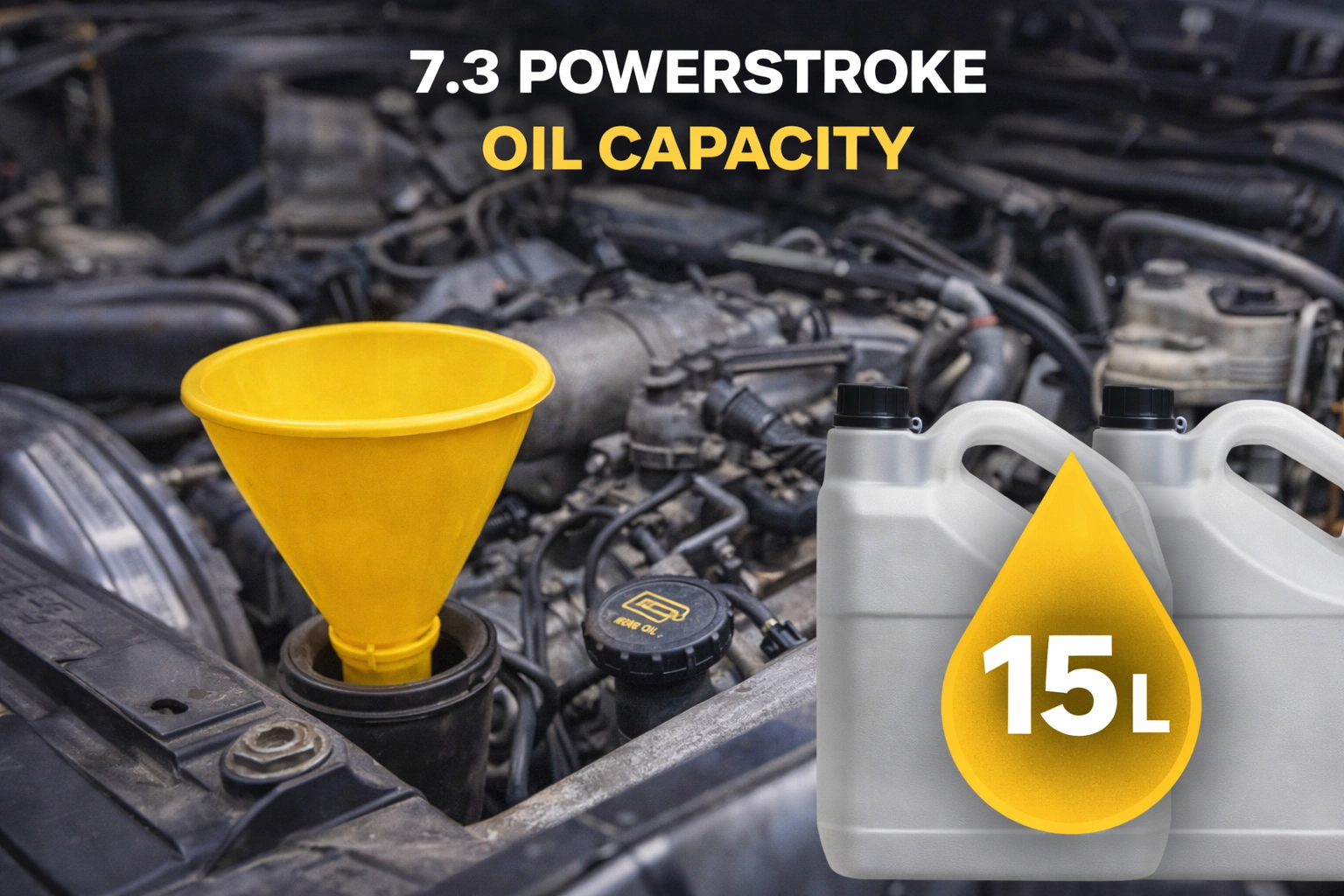
The 7.3 Powerstroke engine holds approximately 15 quarts of oil when the filter is replaced. That figure applies to most Ford Super Duty trucks equipped with this engine between 1994.5 and 2003. The large capacity reflects the engine’s heavy-duty design and the high-pressure oil system used to operate injectors.
During a complete oil change, it is important to include the oil filter replacement because the filter itself holds a significant amount of oil. Filling with 15 quarts typically brings the level to the correct range on the dipstick, but slight variations may occur depending on drain time and vehicle positioning.
After refilling, allowing the engine to idle briefly before rechecking the level ensures oil has circulated through the system. Final adjustment should always be based on dipstick reading rather than relying solely on the measured quantity.
Oil Capacity Without Filter Replacement
If oil is drained without replacing the filter, the capacity may be slightly less than 15 quarts. However, skipping filter replacement during a service interval is not recommended.
The oil filter on a 7.3 Powerstroke plays a vital role in protecting injectors and internal components. Leaving an old filter in place can contaminate fresh oil quickly.
In practice, nearly every oil service for this engine includes a new filter. Therefore, the widely accepted working capacity remains approximately 15 quarts with filter change.
Why Oil Capacity Matters More In This Engine
High Pressure Oil System Dependence
Unlike many diesel engines that rely solely on fuel pressure for injection, the 7.3 Powerstroke uses a hydraulic electronic unit injection system. Oil pressure activates each injector. Clean oil at proper levels ensures accurate injector timing and fuel delivery.
Low oil levels can disrupt this system, causing rough running, hard starting, or injector misfires. The engine control module relies on stable oil pressure to maintain performance.
Because oil operates both lubrication and injection systems, maintaining correct volume becomes more critical compared to typical gasoline engines.
Insufficient oil not only increases wear but can affect combustion quality.
Heat Management And Internal Protection
The 7.3 Powerstroke produces significant torque and heat under load. Towing heavy trailers or hauling payload places stress on bearings, camshafts, and turbocharger components.
The large oil capacity helps absorb and dissipate heat. More oil means better temperature control and improved protection during extended operation.
Diesel engines generate soot and contaminants during combustion. A higher oil volume allows contaminants to disperse more evenly, reducing concentration buildup.
Maintaining proper capacity preserves both lubrication efficiency and cooling performance.
Proper Oil Change Procedure For 7.3 Powerstroke
Draining Old Oil Completely
To achieve accurate refill levels, allow sufficient time for oil to drain completely. Removing the drain plug and waiting several minutes ensures maximum removal of used oil.
Parking on level ground prevents inaccurate dipstick readings later. Some technicians recommend slightly elevating the front end to assist drainage, but final level checks should always occur on level ground.
Replacing the drain plug with proper torque prevents leaks without damaging threads.
Patience during draining helps maintain consistent refill accuracy.
Filling And Rechecking Oil Level
After installing a new filter and replacing the drain plug, add approximately 14 quarts initially. Start the engine and let it idle for a few minutes to circulate oil.
Turn the engine off and allow oil to settle for several minutes before checking the dipstick. Add oil gradually until the level reaches the full mark.
Avoid overfilling. Excess oil can create aeration, which reduces lubrication efficiency.
Final adjustment ensures the level sits within the safe range.
Choosing The Correct Oil Type And Viscosity
Recommended Oil Grades
Most 7.3 Powerstroke engines operate well with 15W-40 diesel-rated oil in moderate climates. In colder environments, 5W-40 synthetic oil improves cold start flow.
Selecting oil that meets diesel service classifications ensures proper additive protection. Diesel engines require stronger detergents and anti-wear additives than gasoline engines.
Using incorrect oil grade may reduce injector performance and increase wear.
Consulting owner manuals or manufacturer recommendations confirms proper selection.
Synthetic Versus Conventional Oil
Synthetic oil provides improved resistance to breakdown under high heat and heavy load. For trucks used in towing or extreme temperatures, synthetic options may extend protection.
Conventional oil remains effective when changed at recommended intervals. Budget and usage patterns often determine choice.
Regardless of type, maintaining consistent service intervals protects long-term durability.
Common Oil Related Issues In 7.3 Powerstroke
Oil Leaks Around Turbo And Valve Covers
High mileage engines may develop oil leaks around valve cover gaskets or turbo pedestal areas. Addressing leaks promptly prevents oil loss and contamination of surrounding components.
Regular inspection under the hood helps identify seepage early.
Ignoring leaks can gradually lower oil levels below safe range.
Maintaining seal integrity protects engine health.
Injector Performance Linked To Oil Quality
Dirty or degraded oil affects injector operation. Rough idle, hard starting, or uneven acceleration may result from neglected oil changes.
Replacing oil at consistent intervals keeps the injection system functioning properly.
Clean oil ensures stable high-pressure oil delivery.
Service Interval Considerations
Oil change intervals vary depending on usage. Many owners perform changes every 5,000 miles, especially when towing or operating in dusty environments.
Extended intervals may be acceptable with high-quality synthetic oil and light duty use, but regular monitoring remains important.
Checking oil level periodically between changes prevents accidental low oil conditions.
Consistent maintenance preserves engine longevity.
The Mechanical Perspective
The 7.3 Powerstroke holds approximately 15 quarts of oil when serviced with a new filter. That large capacity supports both lubrication and fuel injection functions, making oil quality and quantity essential for reliable operation.
Proper draining, gradual refilling, and dipstick verification ensure accurate levels. Using correct diesel-rated oil protects injectors, bearings, and turbo components under heavy load.
Maintaining consistent service intervals and monitoring oil level between changes allows this engine to deliver the durability it is known for. With proper care, the 7.3 Powerstroke continues to perform dependably for hundreds of thousands of miles.

- How Families in UAE Manage Changing Vehicle Needs - March 4, 2026
- How Many Axles On A Car And What They Do - March 2, 2026
- Metal Shavings In Oil Causes And What It Means - March 2, 2026
